
















Why AI Fails Without
As the world rushes headlong into the era of automation, machine learning, and large language models, one uncomfortable truth continues to surface —
Know what’s changing across leadership, performance, and workload early enough to act with confidence.
Workstein helps organisations sense when people strategy is being reinforced or quietly pulled off course.
Most organisations don’t fail because they don’t care. They fail because signals emerge quietly — and surface too late. Workstein is designed to bring meaningful change to attention at the right moment, in the right context, to the right people.
Workstein continuously senses patterns across leadership behaviour, performance consistency, workload pressure, and capability readiness. It does this by interpreting signals from the systems you already use — such as HR platforms, ATS, learning systems, workforce tools, and operational data — alongside lightweight inputs where deeper context is needed.
When meaningful change is detected:
What actually happens:
When a signal surfaces, Workstein places it in context:
What the user sees:
“I’m not being told what to do. I can see clearly why this deserves attention.”
Workstein supports judgement — it never replaces it.
What actually happens:
Once a signal is understood, Workstein helps leaders respond earlier and more consistently.
Not by automating action - but by:
Examples of responses (high-level):
What closes the loop:
Workstein tracks whether signals stabilise, improve, or persist - so leaders learn what actually works.
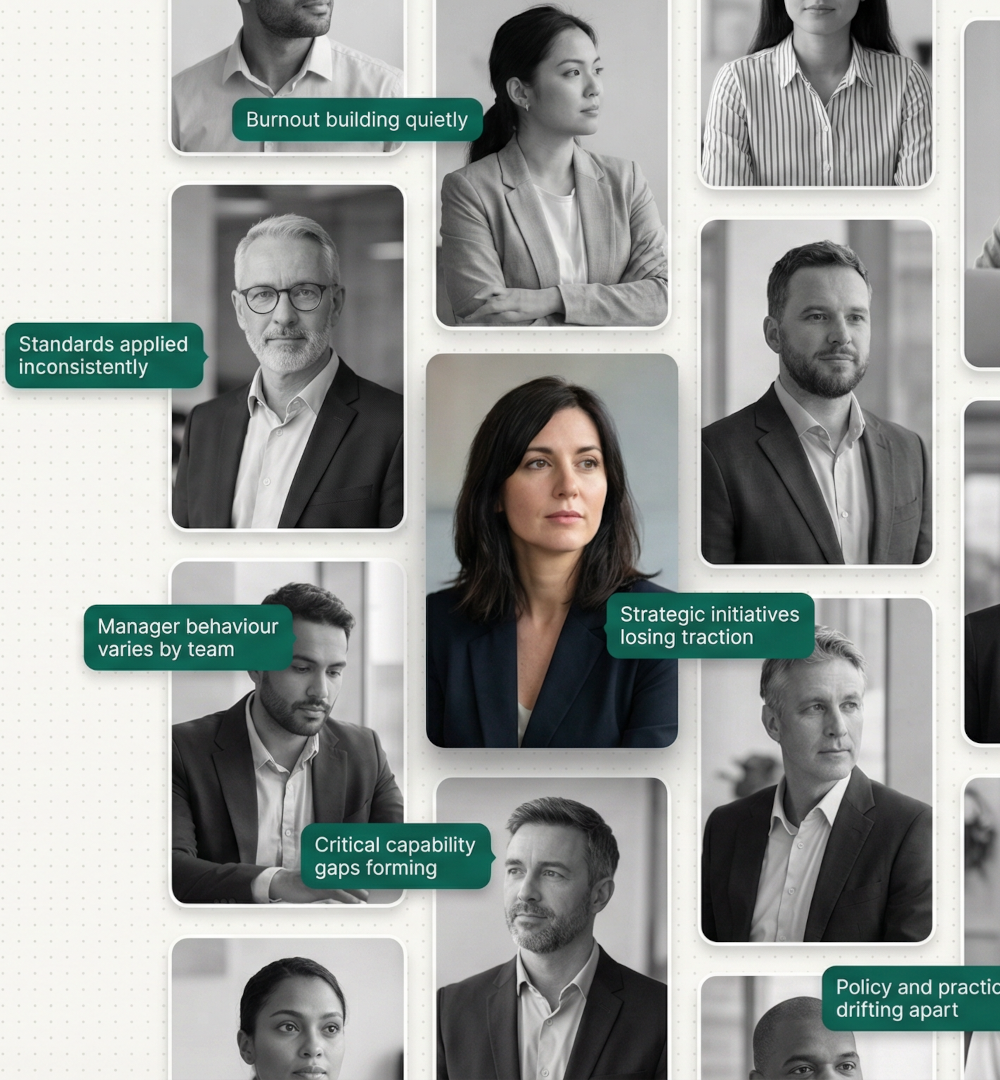
Early indicators that reveal when people strategy is being reinforced or quietly pulled off course.
Early signals that surface meaningful change before it shows up in results or attrition.
Standards are being applied unevenly across teams, creating performance and trust risk.
Sustained pressure patterns that may lead to burnout or attrition if unaddressed.
Skills and capability are falling out of sync with future organisational needs.
Declining engagement and follow-through on priority initiatives.
Quiet withdrawal in participation or feedback that often precedes disengagement.
Consistent behaviours and practices that are strengthening performance and trust.
Most organisations already use HR platforms, engagement tools, analytics, and dashboards. These systems are valuable — but they are designed to report activity and outcomes, not to detect when everyday decisions and behaviours start pulling people strategy off course. That gap is where Workstein operates.
HR systems are designed to manage data and processes. Workstein is designed to interpret what that data means as things are changing.
Workstein doesn’t promise to “reduce attrition” in isolation because attrition is an outcome, not a lever. What Workstein does is help organisations see the conditions that typically lead to attrition much earlier: sustained pressure, leadership inconsistency, capability gaps, and quiet disengagement. When these signals surface early, leaders have more time, more options, and lower-cost interventions available to them. Organisations that act earlier tend to make better retention decisions not because the system tells them what to do, but because they’re no longer reacting after people have already decided to leave.
Workstein is designed to support managers, not burden them.
Managers benefit from:
Instead of being judged after outcomes decline, managers are supported earlier, when small adjustments still make a meaningful difference.
The result is more consistent leadership practice, less firefighting, and better conversations — without adding admin or constant notifications.
Analytics explain what happened. Workstein focuses on detecting early drift and reinforcement before outcomes are visible.
Workstein doesn’t surface everything — it waits until patterns meet confidence and severity thresholds that justify attention.
No. Workstein is deliberately designed to speak up less, not more — and only when signals are meaningful.
No. Workstein supports human judgement by explaining what’s changing and why it matters - remember decisions always remain with leaders.
Copilots respond when asked. Workstein continuously senses patterns and brings important change to attention without prompting.
Workstein is designed to work with imperfect, fragmented data — confidence increases as signals are corroborated, not as data volume grows.
No. Workstein focuses on organisational patterns and leadership practices, not individual surveillance or scoring, unless you require that level of support.
By the time results change, options are narrower and costs are higher. Workstein exists to widen the window for better decisions.
Organisations where people decisions carry real risk and leaders want earlier truth, not just reports.
Workstein doesn’t try to reduce culture to a single score or label. Culture is experienced through everyday behaviour, leadership practice, workload, and follow-through not just sentiment surveys. Workstein senses patterns in how culture is being lived, by observing consistency, participation, pressure, and reinforcement across teams and using the sentiment module. This means leaders don’t get a headline “culture score”. They get early visibility into where cultural intent is being reinforced - or quietly undermined - in practice. That distinction is intentional, and it’s why Workstein is trusted.
Workstein is designed for HR leaders who are expected to connect people strategy to organisational reality and want earlier visibility into where things are drifting or being reinforced. It supports HR in moving from reactive explanations to credible, evidence-based judgement, without policing or surveillance.
Workstein helps managers lead with shared standards, clearer expectations, and fewer surprises. By surfacing early signals around pressure, capability, and engagement, managers are supported earlier — when small adjustments still make a meaningful difference.Each pillar combines real-time employee feedback (soft data) and operational metrics (hard data) to provide a balanced, transparent view of how your people and culture are performing.
Workstein supports healthier organisations by ensuring that voice, pressure, and experience don’t go unnoticed. It focuses on patterns, not individuals — helping organisations respond earlier and more consistently.Each pillar combines real-time employee feedback (soft data) and operational metrics (hard data) to provide a balanced, transparent view of how your people and culture are performing.
Where people strategy meets leadership accountability
Workstein recognises organisations that demonstrate responsible people leadership in practice, not just in policy. Grounded in early signals and alignment, it provides credible evidence that people strategy is being reinforced across leadership, wellbeing, fairness, and capability supporting EVP and ESG commitments with substance, not statements.
How organisations typically start
Most organisations begin by observing a small number of signals using the data they already have — then expand as confidence and value build.
You don’t need to redesign your people strategy or replace your systems to get value from Workstein. Most leadership teams start by observing a small number of early signals — using data they already have — to understand where strategy is being reinforced and where it may be quietly drifting. From there, they decide how and when to go deeper.
Our insights
As the world rushes headlong into the era of automation, machine learning, and large language models, one uncomfortable truth continues to surface —
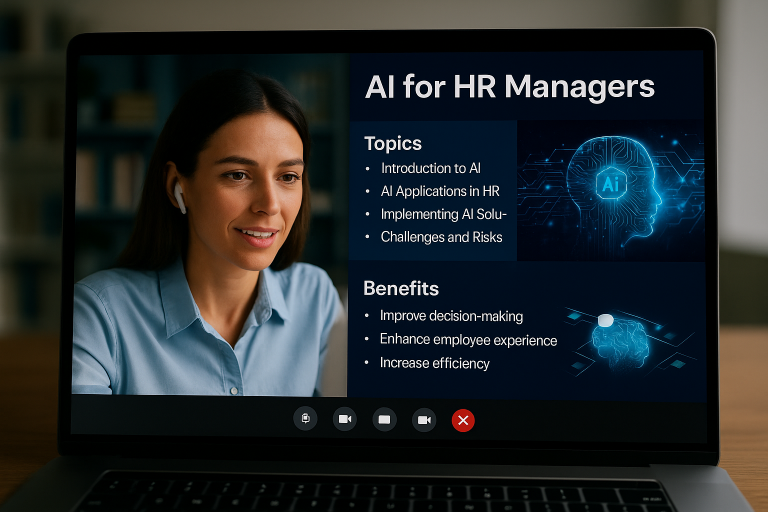
A half-day, online, interactive course designed for UK HR leaders. Gain the confidence, frameworks, and tools to apply AI in HR—ethically, strategically, and
Half-Day Online Course Harness the Power of AI to Future-Proof Your HR Strategy – Ireland Edition ⏱️ Duration: 4 hours (with short breaks)📍
About Us
Blog
Client Access
Workstein © 2026, All rights reserved.